
Awero team
Discoveries for using virtual reality in youth work
7 oct., 10:17
“I see VR as more of an extension than a comparison,” says Nerijus Kriaučiūnas from Awero, an organisation in Lithuania.
Awero and partners from the Cities of Learning Network have invested time exploring virtual reality (VR) and its usefulness in youth work settings, not replacing offline methods, but complementing them.
Our discovery? VR isn’t a replacement for other forms of youth work, but an extended participation, creativity, and learning experience for young people and youth workers.
Throughout the project, youth workers have been testing VR for everything from work readiness to creative expression, co-creation, international youth exchanges to youth topics that matter and more besides.
Their experiences differ, but there is commonality. An immersive activity can catch a young person’s interest. What happens next depends on the choices young people are offered, the care youth workers take to prepare the space, and the conversations that follow.
Here are five learnings from the project:
1. Be purposeful and make the invitation attractive
“We aim to do more than gaming,” says Sandra Zoomers from Breakthrough organisation in the Netherlands. “We want to achieve something with young people, either as individuals or a group.”
Breakthrough’s VR pilots in the Netherlands begin by asking youth workers and youth groups why they want to use the VR technology and what they hope to achieve. That focus on a clear purpose gives virtual sessions direction, while still giving young people room to explore.
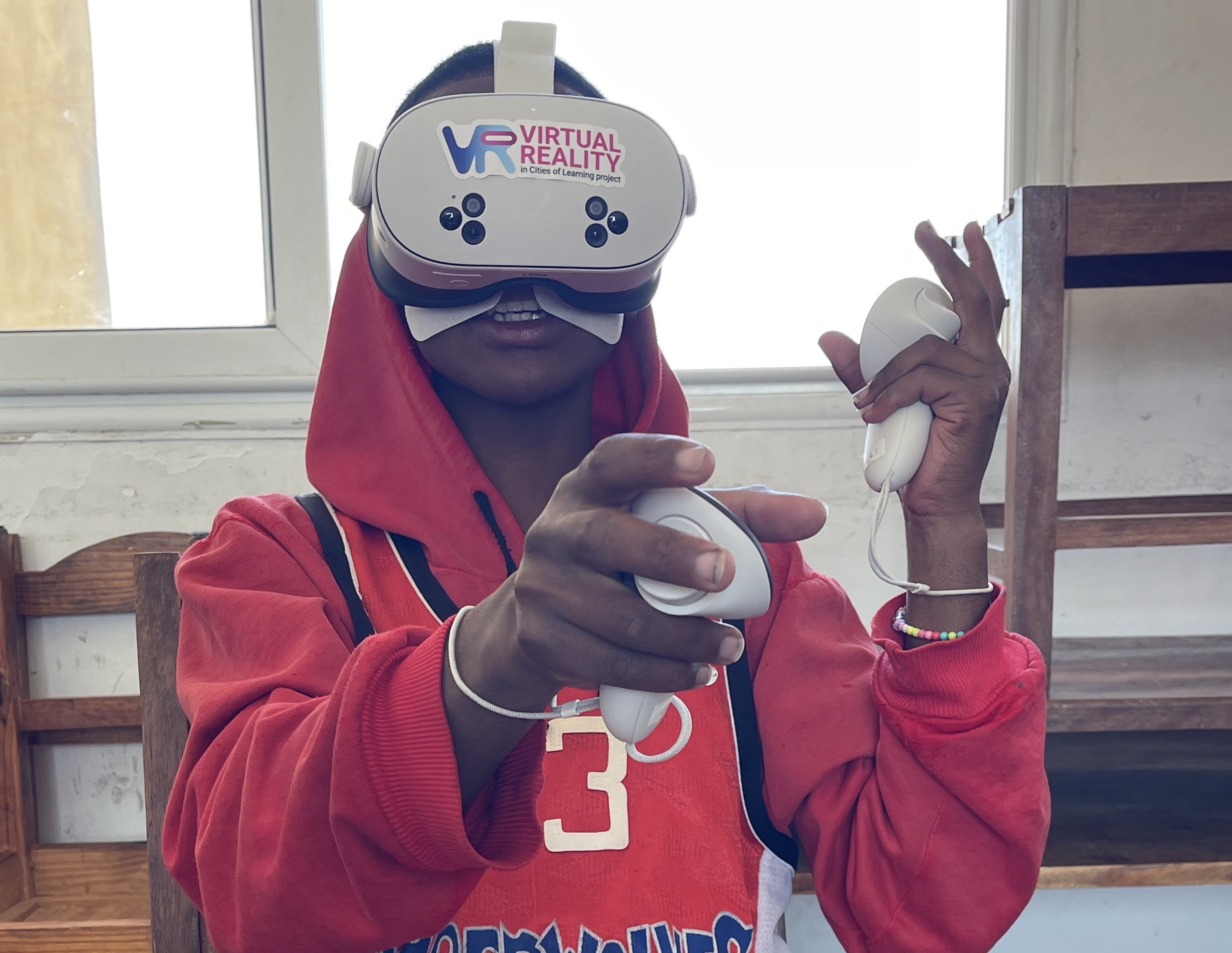
In the UK, Think Forward’s Loving Work programme with youth homelessness charity Streetlife used VR to get young people aged 16-25 thinking about employment.
“As soon as we mentioned work, we realised that wasn’t the way to do it,” says Think Forward’s Buzz Bury.
Some participants had never had a job, and an activity framed as employment preparation did not appeal to them. But a simpler invitation to “come and try a VR headset” worked for them.
Once over the threshold, young people were immersed in jobs in virtual coffee shops, hairdressers, and the fire service, encountering situations that prompted communication, problem solving and strategic planning. Essential competences to discuss after the headset comes off.
The first step, then, is to find a reason for young people to enter. Their curiosity gives youth workers something to build on.
2. Build your ‘VR muscles’
Despite the opportunities, none of the projects found that handing out headsets was enough.
Before the headsets go on, Breakthrough checks in whether an immersive activity is suitable, taking into account factors like anxiety, claustrophobia and epilepsy. “Virtual reality is not for everybody [equally the same experience],” Sandra explains.
To ease young people into the experience, Sandra’s team used augmented reality as a middle ground, allowing participants to continue seeing the ‘real’ world to help them feel more comfortable.
Abi Hellam from The Old Electric in Blackpool (UK) reflects that people often come with different levels of digital skills, and those with gaming experience are often ahead of onboarding to VR and using controls.
“You don’t realise that you might be quite proficient in it compared to someone else until you’re all in a room with lots of different people together,” she says.
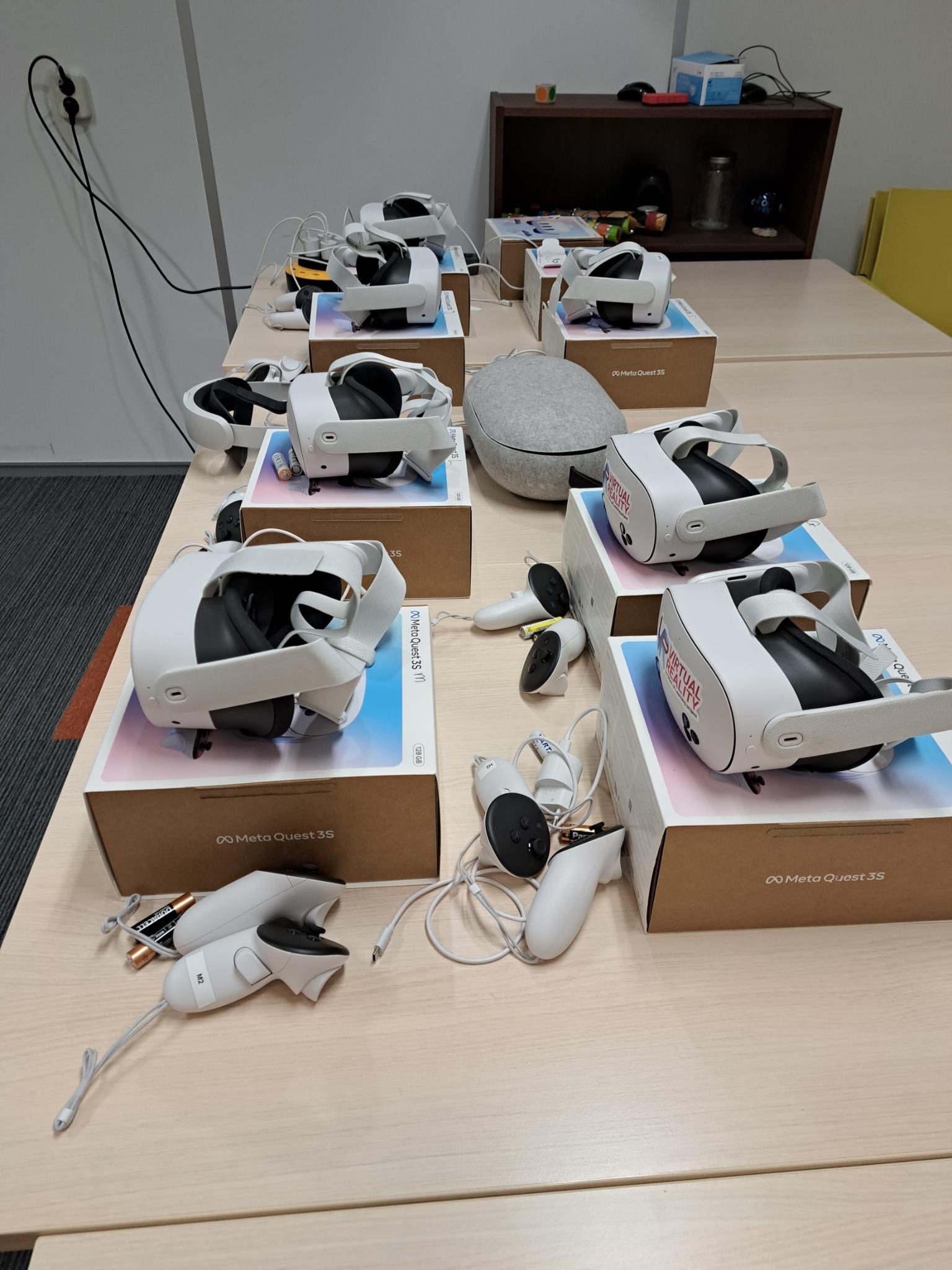
Ultimately, all the projects found that having youth workers in the room with enough know-how to guide young people through the experience was essential. Buzz urges facilitators to try VR for themselves before getting started: “You need to have that experience to know what you’re talking about.”
For Sandra, growing VR competencies comes down to training like you would in a (VR) gym. “You start with not-so-strong muscles, but with exercising a lot, you build them,” she explains. “You become stronger and more capable.”
3. A curious creation space, where mistakes are ok
Abi and the team at The Old Electric worked with five young people with special educational needs to create three-dimensional objects and imagined worlds, expressing their creativity without conventional limits but with an undo button.
“Making a mistake isn’t as much of a thing because you don’t have to worry about [running out of] materials,” she says.
“It’s less scary than trying something physical and going, ‘What if I mess up?’”
In Italy, Fabrizio Fiore’s team at Madiba trialled using VR in its Street Lab activities. The technology becomes a starting point to create objects that could become physical through 3D printing or paint digital murals before putting them on walls.
“You can see all the drawings, and you can already feel, ‘Oh, it is the final project,’” Fabrizio explains. “We want to connect the digital world with the real world.”
As well as creating for the physical world, there’s also space for creation inside virtual experiences. Young people from Lithuania designed an immersive parkour experience, testing and refining with young people at their local youth centre, before sharing it internationally in a virtual youth exchange.
Sandra describes the shift as “not only consuming virtual reality,” but designing it. Nerijus takes it further: “Aim at co-creation. That’s where empowerment happens with young people.” Across the projects, young people gained more from VR when they could shape an experience as well as enter one.
4. Creating spaces that are difficult to arrange
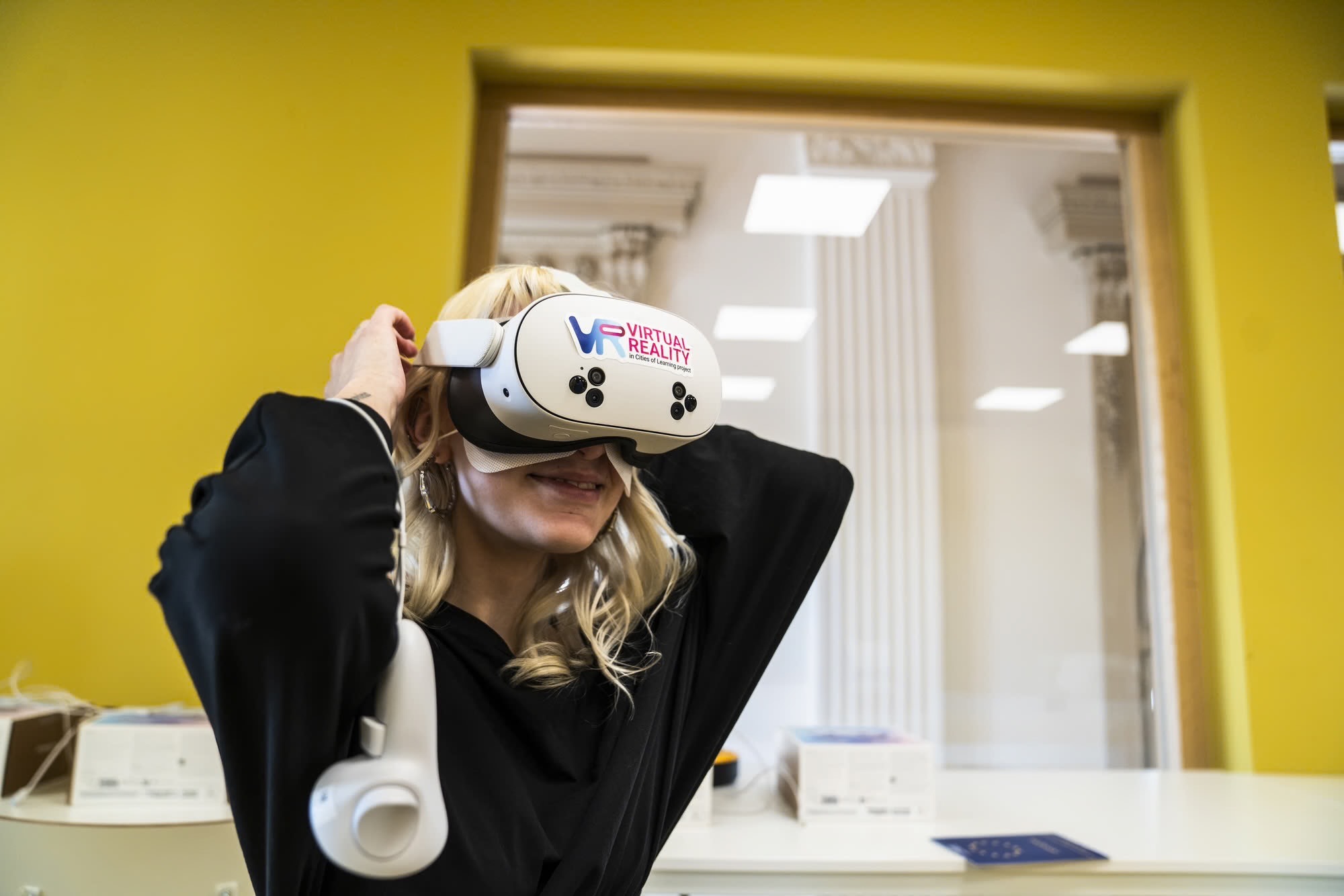
“VR is so good at making you feel something, not just see it,” says Maartje Simons, Sandra’s colleague at Breakthrough
That ability allows youth workers to guide young people through unfamiliar situations, giving them something to respond to and reflect on.
Sandra and Maartje used VR to put young people in the shoes of people of colour, experiencing discrimination first-hand, and imagine a world without bees and pollinators. A tough call in VR that makes people think about the real world.
The pair reflect that these experiences got young people talking about subjects that hadn’t previously been “on their radar.”
A simulated workplace can open a different kind of possibility. Buzz recalls a young person interested in the army trying a logistics activity and beginning to consider roles beyond the front line. The VR experience may not have led young people directly to employment but what they did see was an interest sparked, and a young person ready to ask a new question about work.
For young people in some countries, distance and the affordability of travel was sometimes a barrier. But, Sandra says using VR levelled the playing field, allowing participants from places like Curaçao, Moldova, Ireland and South Africa to join a shared activity. Inside the virtual youth centre, participants helped each other with controls, worked together to solve puzzles, and figured out where to go next. “We saw people helping each other a lot,” she recalls.
These encounters are varied, but they have something in common: young people leave with an experience they can describe. A youth worker can then ask what surprised them, what they noticed about someone else or where their curiosity might take them next.
5. Turn the experience into learning together
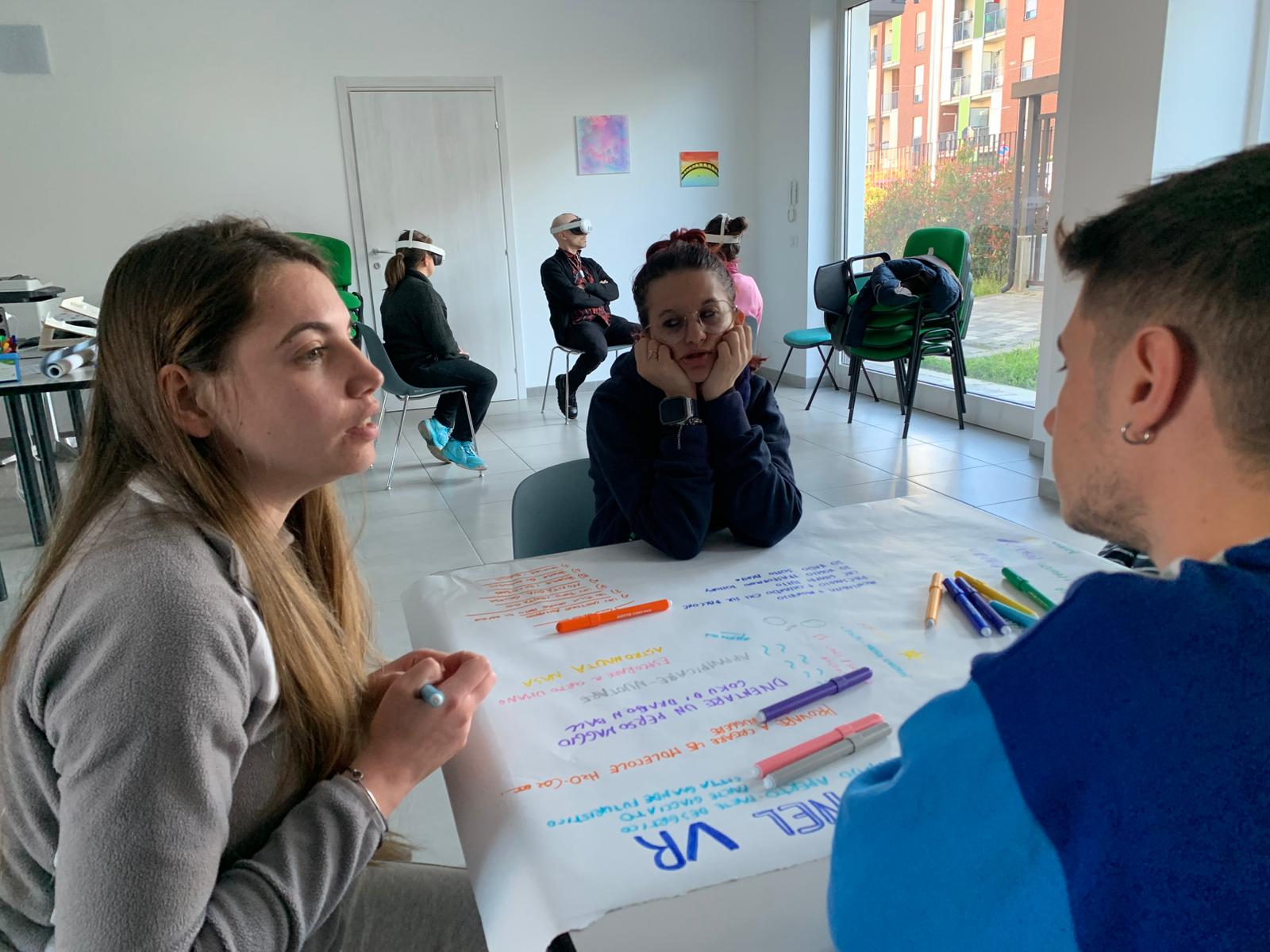
The strongest learning from the project comes after the headset comes off. “A lot of the really good work comes after,” Courtney Clowes, VR Project Worker says. In a workplace simulation, he might ask what the young person did, what they found difficult and which skills they could describe in a CV or interview. The VR game experience gives both people a concrete moment to discuss.
Sandra takes a similar approach to virtual exchanges. Young people may see themselves as playing while also practising digital skills, cooperation and problem solving. “We need to really reflect with young people about what they have been learning and doing,” she says.
That conversation also matters when an experience is uncomfortable. Breakthrough found that a person wearing a headset could be startled if someone touched or shouted at them. In open virtual spaces, the team encountered behaviour they did not want young people exposed to, so they sought more controlled places to meet and create. Those experiences gave youth workers a reason to discuss consent, boundaries and online behaviour with young people.
While VR may not be a magic solution, automatically meaning a young person will discover a career, become confident in art or form a lasting international friendship. The projects show smaller, observable steps: someone tries again after struggling; two participants solve a problem together; a young person considers a job they had overlooked; a group builds a place for peers in another country.
Those steps are worth noticing. With a clear purpose, thoughtful preparation and time to reflect, youth workers can help young people carry some of what they discovered in a virtual space into other areas of their lives.
To find practical tools, guidelines and resources created through the project visit the Cities of Learning Virtual Reality platform.
Funded by the European Union. Views and opinions expressed are however those of the author(s) only and do not necessarily reflect those of the European Union or the European Education and Culture Executive Agency (EACEA). Neither the European Union nor EACEA can be held responsible for them.
Partager :