
Awero team
Blank space to bold ideas: VR and creativity for young people
7 oct., 10:05
“It’s like a door to enter a new place. Not specifically a new digital world, but also a real one,” says Fabrizio Fiore from Madiba in Turin.
For him and the team, that idea captures something important about virtual reality. Used creatively, VR is not simply an escape into a digital space. It can become a place where young people experiment, build confidence, make mistakes and imagine what they might create in the physical world.
Experiments through the Cities of Learning Virtual Reality project show how the technology can open new creative possibilities, but also why it needs thoughtful facilitation if those possibilities are going to work for everyone.
Making mistakes without being afraid of them
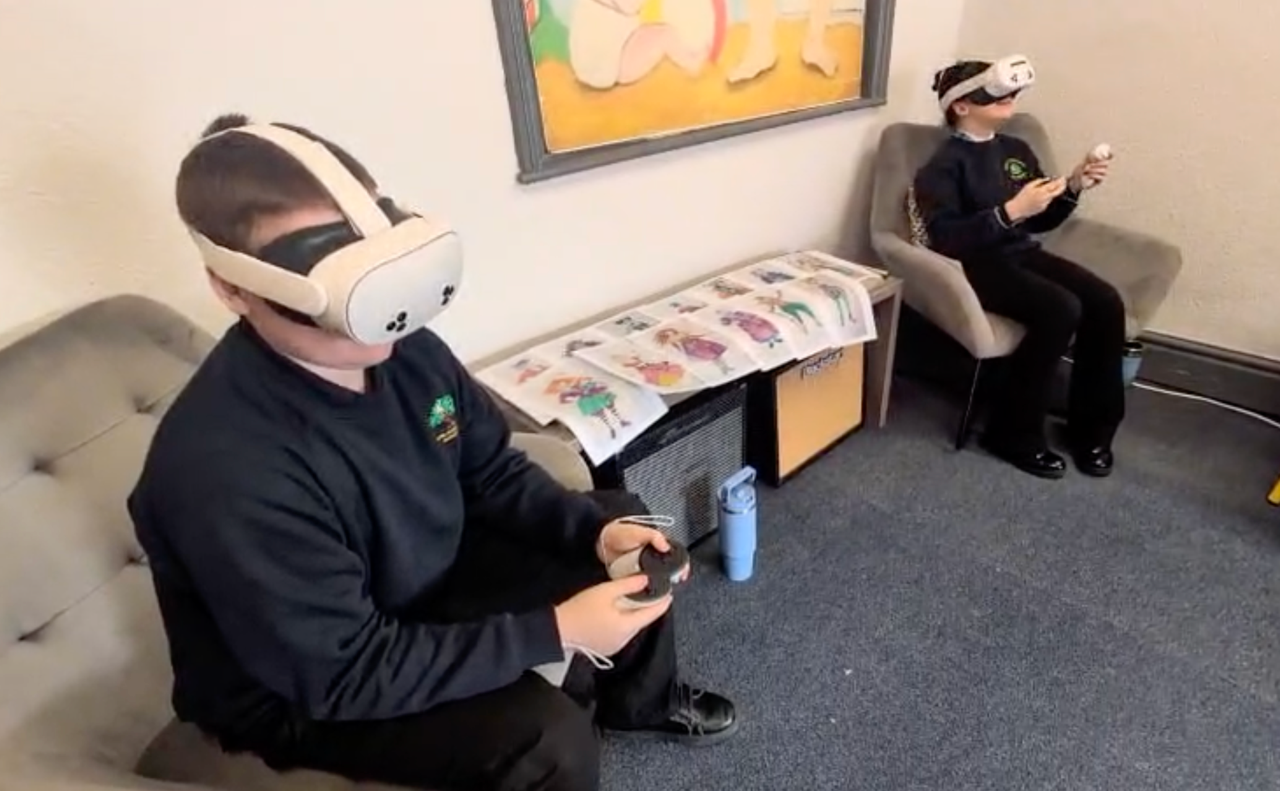
In the UK, The Old Electric worked with young people from special education needs school Park Community Academy to trial the technology too.
Abi Hellam from the team in Blackpool used characters from a community theatre production as their starting point, creating three-dimensional objects, environments and imagined worlds using Open Brush and Spatial.
Some young people made recognisable objects. Others created abstract, colourful sculptures that people could virtually walk through.
For Abi, one of VR’s biggest strengths was the freedom to experiment.
“You can start from nothing,” she says. “Making a mistake isn’t as much of a thing because you don’t need to worry about materials and thinking, ‘Oh well, I wasted a bit.’ It’s like, ‘Oh no, that went wrong. Just undo.’”
That ease can change how young people approach creativity. Instead of worrying about getting something right first time, they can try, erase, rebuild and change direction.
“It’s less scary than trying something physical and going, ‘What if I mess up?’” Abi explains.
Fabrizio has seen something similar. He describes VR as “a beautiful instrument to start something first in digital, and then when you feel comfortable, you can start manually”.
Daniel Astbury at CreatIF had a similar experience. “Picking up a virtual spray can and working on a virtual wall can build confidence to apply this creativity in the real world,” he says.
For young people who have fewer opportunities to access creative materials, that matters too.
“In VR, you have everything,” Fabrizio explains. “You can start to experiment with different surfaces, different materials.”
From uncertainty to “I’m proud of myself”
The impact becomes clearest in individual moments.
Abi remembers one young participant who arrived nervous, quiet and unsure of the technology. For the first sessions, she found it difficult to get to grips with the tools.
Then something shifted.
Working with a character who was half snake, she created a huge piece of snakeskin that wrapped around the character and stretched through the virtual room.
“She was just like, ‘I’m really proud of myself, because I couldn’t do it last week and I feel like I’ve got it,’” Abi remembers.
By the end of the project, she was talking about her work, showing it to other people and collaborating with the rest of the group.
Fabrizio recognises that journey from hesitation to curiosity. He describes the “wow effect” young people experience when they first use VR, followed quickly by questions: “What can we do with that? What can we do with this?”
For him, VR can help lower the tension around trying something new and give young people an easier point of entry into creative activity.
Taking creativity back into the real world
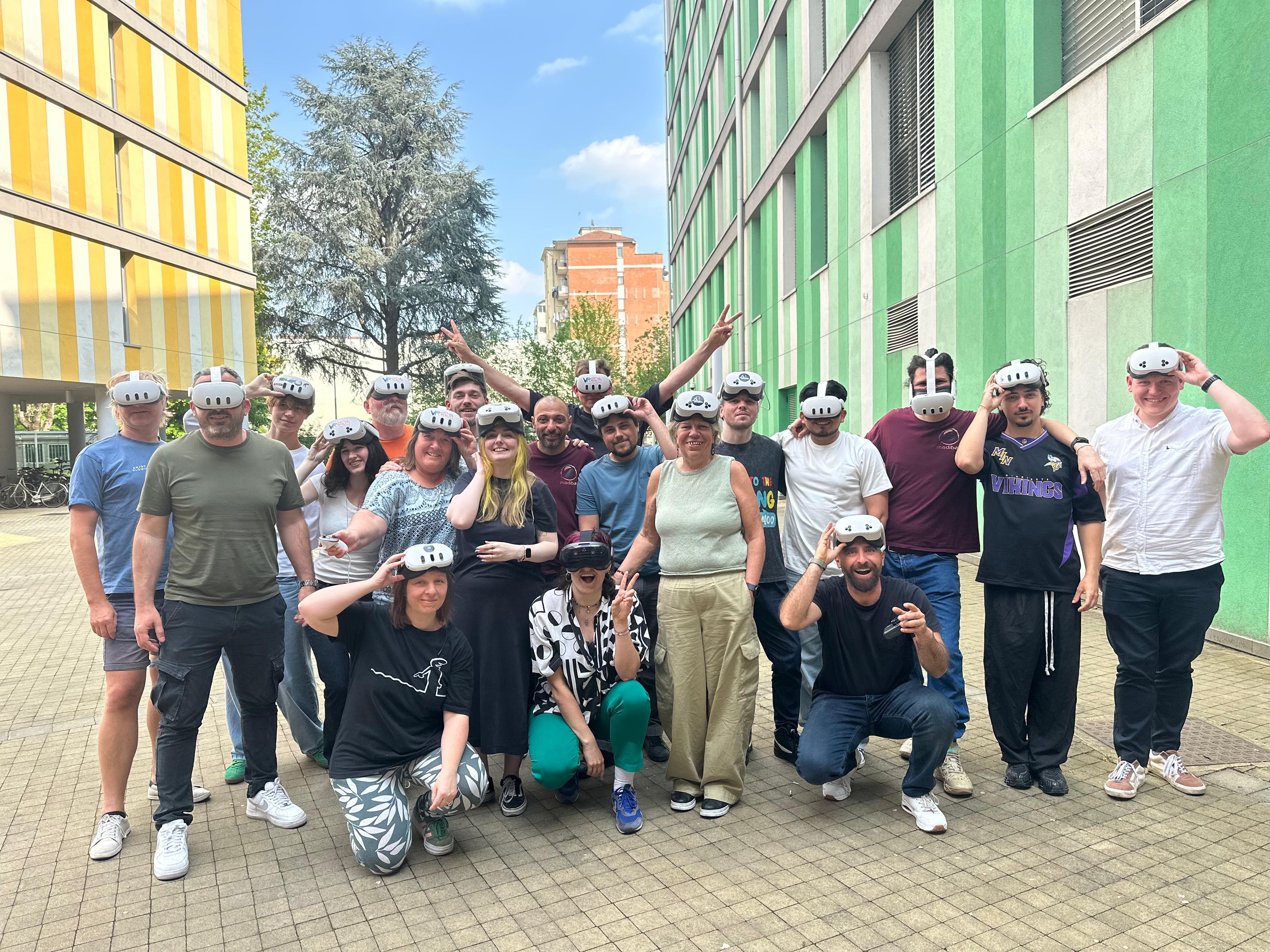
Fabrizio reflects that some of the most interesting possibilities emerge when virtual and physical creativity start to connect.
Madiba created a digital photo gallery exploring how its municipality has changed over time, bringing younger and older residents together to share different experiences of the same place.
The organisation has also experimented with sculpting in VR and using a 3D printer to turn virtual objects into physical ones.
In its Street Lab activities, where young people create graffiti and murals to bring new life to neglected spaces, VR has helped participants visualise a finished artwork before painting it.
“You can see all the drawings, and you can already feel, ‘Oh, it is the final project,’” Fabrizio explains.
Creating in three dimensions can also change how young people think physically about art.
“When you are in VR, it’s like your body starts moving and watching around what you can do,” he says.
Madiba is now exploring ways for young people to create artistic interventions in real public spaces that exist virtually rather than permanently changing a building or street.
“We don’t want to make everything digital,” Fabrizio says. “We want to connect the digital world with the real world.”
Technologically exciting, but facilitation matters
Both Abi and Fabrizio are clear that VR brings challenges too.
Young people can arrive with different levels of digital skills. Abi says those familiar with gaming controls often pick up the tools much faster.
“You don’t realise that you might be quite proficient in it compared to someone else until you’re all in a room with lots of different people together,” she says.
That means facilitators have to create a common starting point rather than assuming that all young people are naturally confident with technology.
Immersion can create another challenge. Abi found that participants could become so absorbed in their own virtual worlds that it became harder to bring them back together as a group.
“You can become quite sort of in your own bubble,” she says.
Using extended reality, where participants could still see the physical room and the people around them, helped maintain that sense of connection.
Fabrizio describes VR as “a J-curve learning experience” - easy to enter, but harder to master.
As young people become more confident, their questions become more complex. This in turn means facilitators need to know the software well enough to support them, troubleshoot problems and explain tools clearly.
Managing larger groups creates practical pressures too. Fabrizio found that supporting multiple headsets and technical problems at the same time could quickly become difficult, requiring organisations to think carefully about group sizes, staffing and safeguarding.
For Abi, knowing the software before a session is vital. “As long as you’re really familiar with the software that you’re using before, and you’ve played around with that before the sessions, it’s good.”
But perhaps the strongest argument for trying VR remains a very human one.
“I didn’t think I’d find it as interesting and exciting as I do,” Abi reflects. “Even if you think it’s not for you… just give it a go, because unless you’ve tried it, you don’t know.”
VR may be a digital tool, but in these projects its value lies in something much more familiar: giving young people the confidence, freedom and space to discover what they can create.
To find practical tools, guidelines and resources created through the project visit the Cities of Learning Virtual Reality platform.
Funded by the European Union. Views and opinions expressed are however those of the author(s) only and do not necessarily reflect those of the European Union or the European Education and Culture Executive Agency (EACEA). Neither the European Union nor EACEA can be held responsible for them.
Partager :