
Awero team
A Virtual Reality youth exchange that young people can build together
7 oct., 09:56
“When you start with VR, you offer things to experience, but aim at co-creation,” says Nerijus Kriaučiūnas from Awero in Lithuania. “That’s where empowerment happens with young people.”
That idea guided a Cities of Learning exploration of virtual reality (VR). Collaborating with Sandra Zoomers of Dutch NGO Breakthrough and other partners, the network wanted young people in different countries to meet, explore and build a shared place. Born out of the challenge of being unable to connect during the COVID-19 pandemic, the partners began testing how VR could offer a solution.
A place to meet across borders
Awero began experimenting with VR during the pandemic, when travel restrictions removed young people’s opportunities to connect across borders. “It was a way to meet, gather, move and create,” Nerijus remembers. “We wanted to keep allowing young people to connect with somebody from another country, do something fun and then learn about each other.”
Sandra pictured a virtual youth centre: a place to meet, play, talk with a youth worker and explore subjects young people cared about. She also wanted them to gain experience with emerging technology. “We had the assumption that many young people were familiar with virtual reality,” she says, but found that many had never tried it.
Finding a suitable space was harder than expected. But eventually with the input of Paul Phillips and the team at Essex Youth Service in the UK, the team chose Roblox partly because young people could build within it. Sandra wanted them to be “not only consuming virtual reality”, but creating the place they would share. Initially, partners had safeguarding concerns about using an open platform, but by exploring the technology they were able to discover spaces that could be made private on Roblox.
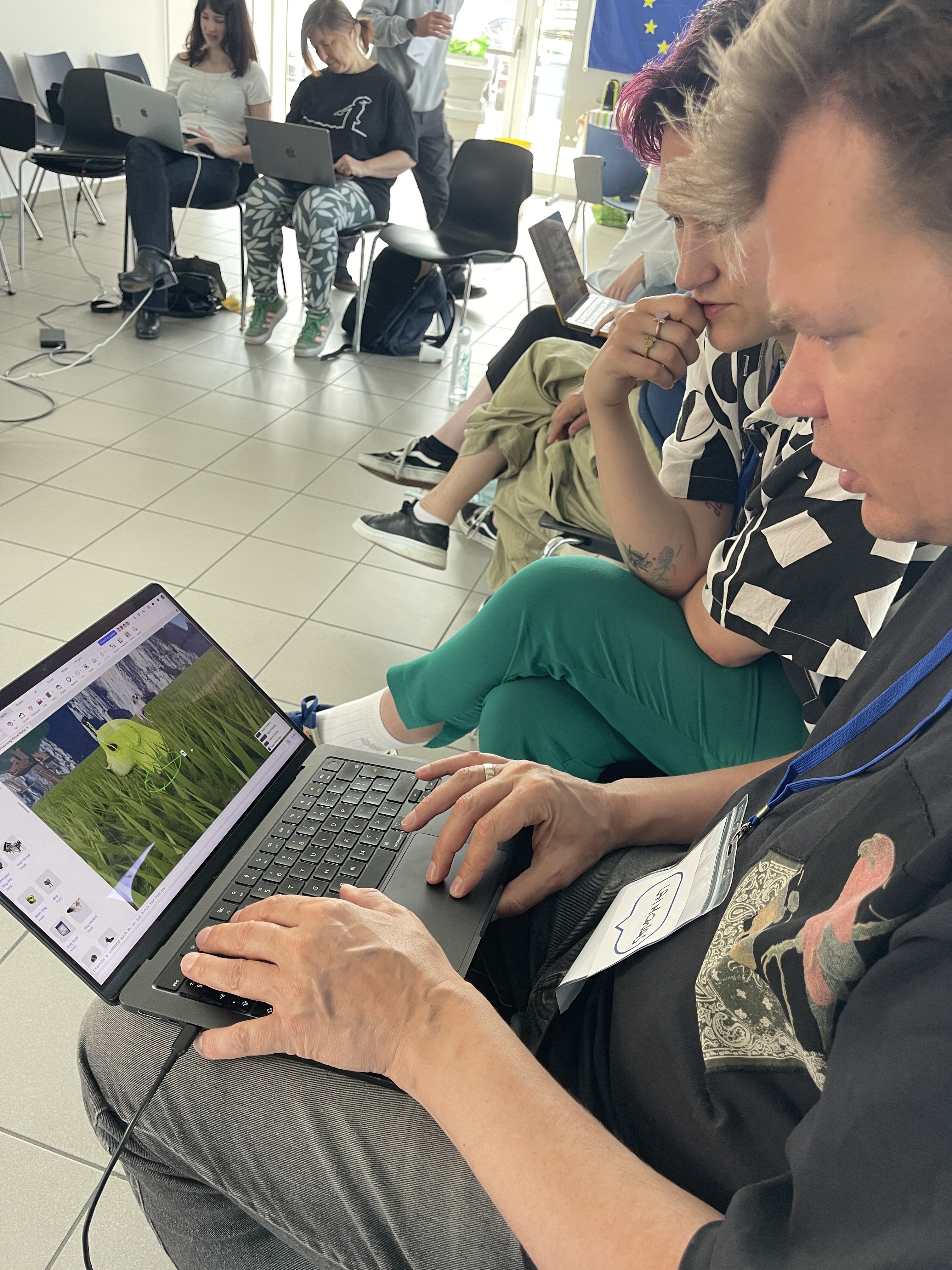
At the partners Best Practice Seminar in Turin the partnership explored using Roblox for creating a youth space. The learning from these first steps were essential when realising co-production with young people.
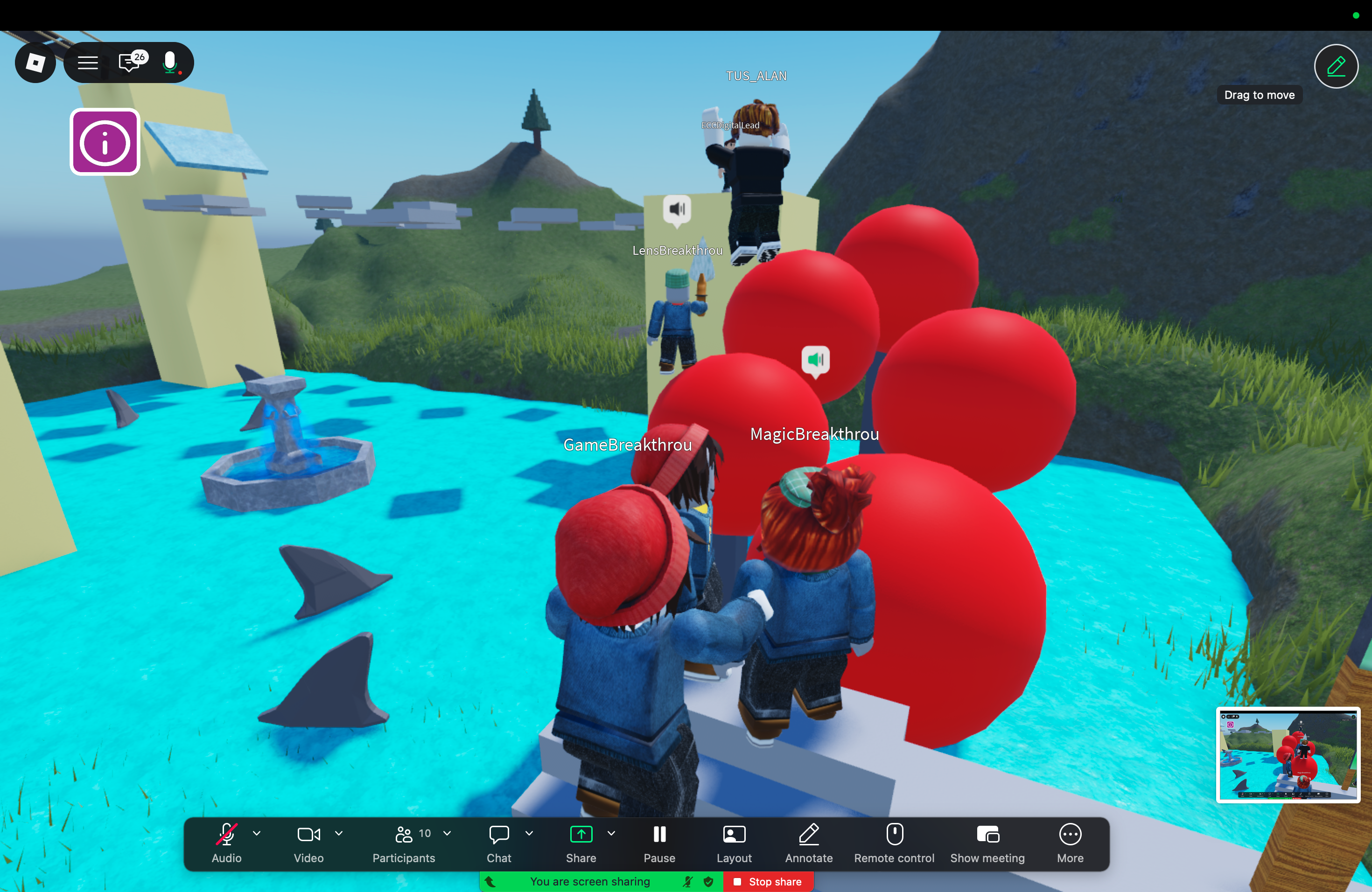
That shared space brought young people together in ways a video call could not. Sandra watched participants guide each other to puzzles and help with the controls. “We saw people helping each other a lot,” she says.
VR also closed the distance to countries where travelling to a youth exchange is more difficult, enabling young people from places like Curaçao and South Africa to participate. “Playing together” and moving with controllers, Sandra says, made the meeting feel “much more immersive and much more real.”
For Think Forward the international virtual exchange and experiences offered the opportunity to engage young people from the Magic Club and from Streetlife and build local momentum for VR in Blackpool.
From exploring to building
The first sessions gave young people activities to try. Afterwards, Nerijus and the other youth workers asked: “What did you like? What was working? What would you like to see? What would you like to create?” Their answers became ideas for what to make next.
One Lithuanian group could not join a live international session. Instead, they spent an evening at their youth centre building a parkour challenge. They tested it with other visitors, made changes and shared it with the international group. When participants returned, they found a new place to jump, fall and try again, made by their peers.
The ease at which young people discovered how quickly they could start creating their own worlds was also a positive. Sandra reflects that with “a little bit of explanation” about the control, most found it “very cool to build for themselves.”
“[It’s] an extension of our creativity and our ideas,” says Nerijus. “And it opens possibilities that the ordinary laws of physics would rule out.”
But what mattered was the change in ownership: “Transitioning from being a consumer or a player into creator.” Young people’s ideas were put front and centre, designing what everyone could experience together.
Room to explore and reasons to talk
The open nature of some VR experiences also asks youth workers to allow for more unplanned exploration. Nerijus recalls watching young people enter a space, but run off in different directions before finding each other once more.
“They explore until some moment and then they start to connect with each other,” he says. Someone might spot another participant jumping on a distant mountain, follow them and start talking. Youth workers had prepared the space, but they did not have to direct every encounter.
Sandra saw similar learning in small moments of cooperation. Young people walked one another to activities, explained which buttons to press and solved problems together. These interactions also gave groups something to discuss after the session.
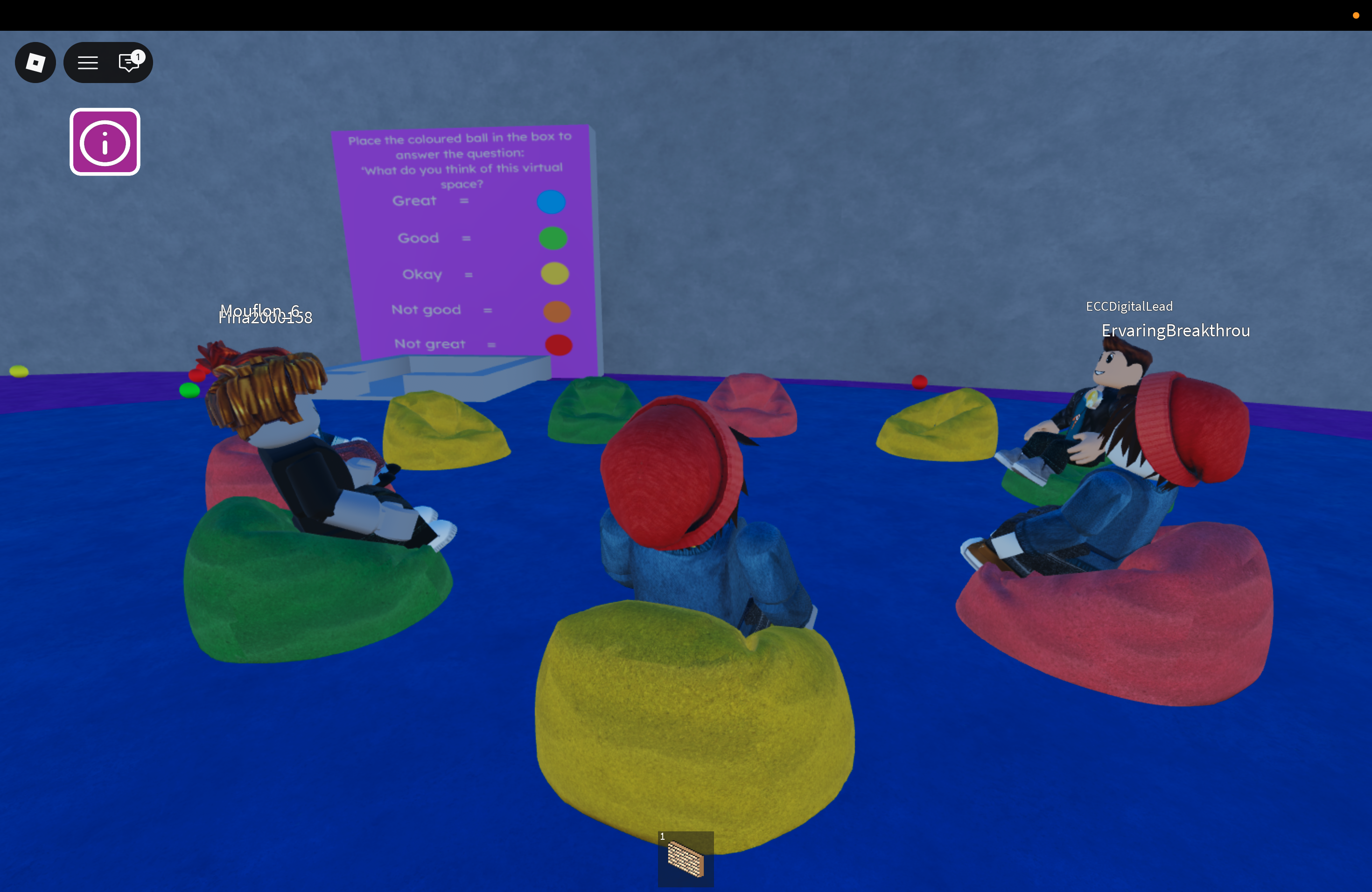
“[It] creates a lot of experiences for debriefing,” says Nerijus. What was possible? What limits did they encounter? And how did they work together?
That reflection matters to Sandra too. “We need to really talk with young people about what they have been learning and doing,” she explains. Participants might arrive expecting a game, yet leave having practised digital skills, creativity and cooperation. A conversation helps them recognise those experiences as learning.
Learning to host an exchange in VR
Getting a group into the shared space took work. Accounts and headsets needed setting up; youth workers had to learn the environment; and partners needed meeting times that worked across countries. Sandra found that preparing young people remotely could take hours. “You want them to easily access [VR], especially in the beginning,” she says. That ease depended on preparation before anyone put on a headset.
The team drew on Paul’s experience at Essex Youth Service, where youth workers had already developed a virtual youth centre. “Without the help from Paul,” Sandra says, “we would not have succeeded with getting there.” Over time, practice gave the partners what she calls “VR muscles”: the confidence to adapt when something went wrong and help others get started.
Nerijus also stresses the importance of youth workers knowing the space themselves before guiding a group through it. The team prepared technical, educational and safeguarding guidance, although experience remained an essential source for learning. Multi-device access ensured access for all: someone could join through a headset while others used a computer or phone, so a group did not need a headset for every participant.
Looking to the future, the partners hope to keep the shared spaces they’ve created available and hold more virtual exchanges through Cities of Learning. Nerijus imagines young people creating together before an in-person exchange and returning to the space afterwards to reconnect. And for Sandra, she sees the same promise in a place young people can make their own. As she puts it, the process needs “preparing, experiencing, but also reflecting”; the familiar work of a youth exchange, carried into a new environment.
To get started with virtual reality for youth exchanges, explore the playlist on Co-Creating International Youth Spaces on Roblox.

Funded by the European Union. Views and opinions expressed are however those of the author(s) only and do not necessarily reflect those of the European Union or the European Education and Culture Executive Agency (EACEA). Neither the European Union nor EACEA can be held responsible for them.
Partager :