
Awero team
Beyond the next tool: building digital youth work to last
27 ліп, 09:26
“I’m not arguing anymore that we need to be where young people are,” says Nerijus Kriaučiūnas from Awero. “But we need to be professional where young people are if we want to achieve positive impact and create opportunities for young people.”
For Nerijus and the Digital Systemic partners the conversation isn’t about whether youth workers should enter online spaces. It's about strengthening the competences, organisational capacity and systems to make digital youth work possible and sustainable.
The central message is clear: digital youth work cannot depend indefinitely on a few enthusiastic individuals.
From experiments to lasting practice
Awero’s involvement in digital youth work began before the pandemic. The organisation was already testing digital platforms and methods when COVID-19 created an urgent demand. Awero’s massive open online course brought together thousands of youth workers and educators looking for ways to engage young people remotely.
The experience also exposed a familiar pattern.
“A youth worker wants to use a tool and is so excited doing it one, two, three times, and then drops it,” Nerijus explains. “Maybe Virtual Reality (VR) is another excitement: ‘We have VR glasses – wow, great!’ One summer we did VR, and then the glasses were somewhere in the corner.”
The problem is not experimentation. Trying new platforms and approaches is essential. The difficulty comes when organisations fail to capture what they learn or create the conditions for successful practices to continue.
“We realised that it’s not enough just to be enthusiastic about digital youth work,” Nerijus says. “We need systemic, strategic approaches.”
That realisation didn’t happen in isolation, the European Digital Competences and Capacities in Youth Work report sets out the challenge. Long-term thinking with clear goals and adaptations in youth work approaches and organisations are fundamental.
In practice it means giving youth workers paid time to learn, reliable equipment and permission to test, reflect and adapt. Awero’s experience with virtual reality made this particularly clear.
“It took us half a year to feel comfortable in VR environments,” Nerijus says. “If I hadn’t been afforded time and didn’t have resources to spend learning, I wouldn’t know what to do with VR, even if they gave me ten headsets.”
Meaningful engagement also develops gradually. “Engagement will not happen because you hosted the first online meeting with young people,” he says. “It will develop over time.”
Digital Systemic was created to help organisations move from one-off activity to sustained practice. The partnership developed training, learning pathways, assessment tools, resources and recommendations for youth workers, organisations and decision-makers.
The aim was not to identify one perfect tool, but to build organisations capable of choosing, testing and sustaining approaches that work for their young people.
Different countries, one shared uncertainty
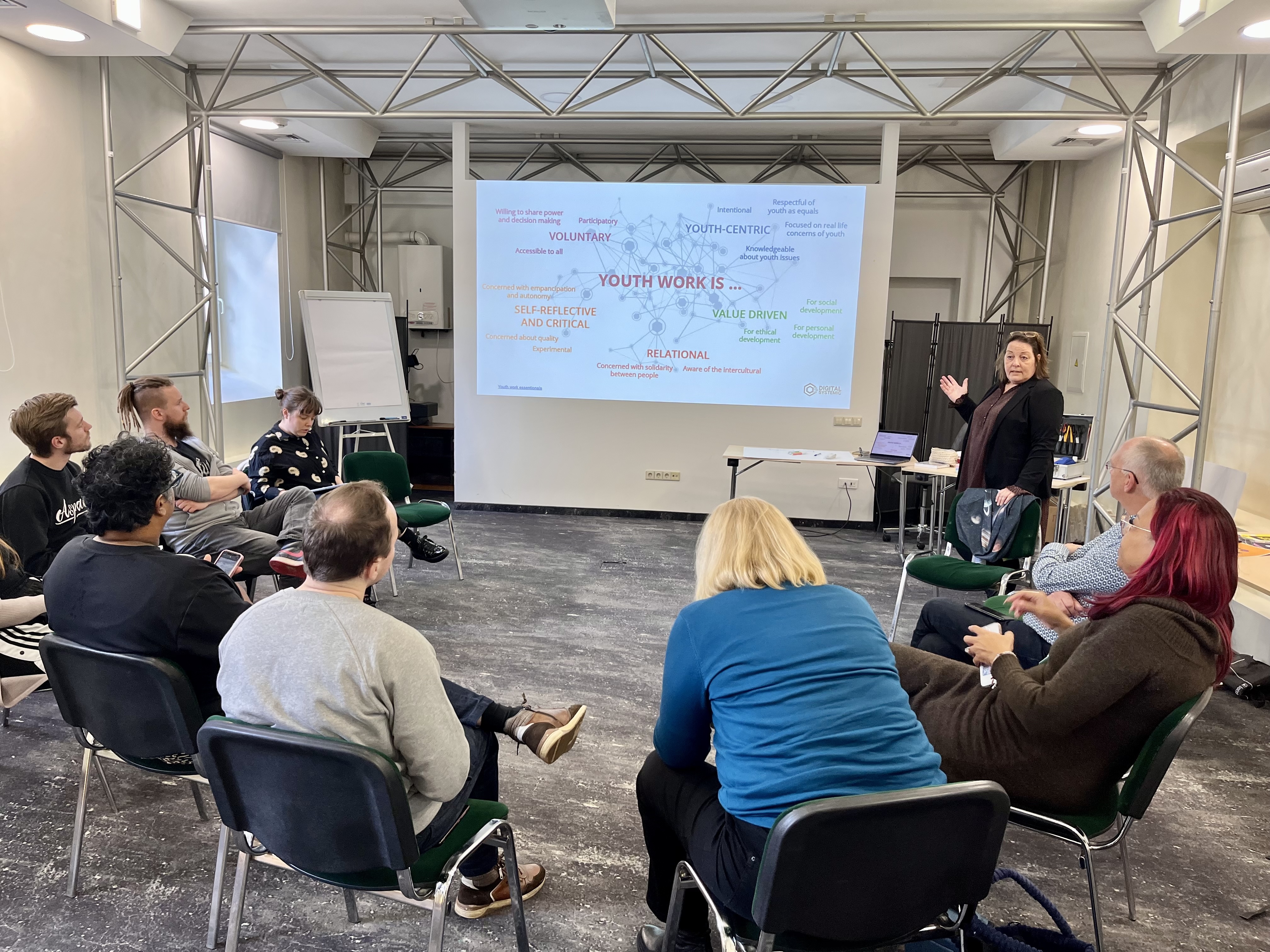
The project brought together four very different youth work realities.
In the Netherlands, professionals are employed specifically as digital youth workers. Lithuania’s youth work infrastructure is growing, but digital youth work is still treated mainly as a method rather than a properly resourced form of practice. Slovenia has strong examples developed during the pandemic, while in Curaçao the broader concept of youth work is still emerging.
“It’s very diverse,” Nerijus says. “And that’s only four countries. You can multiply that across Europe.”
But beneath those differences, the partnership found something shared.
“People deeply care about what happens with young people online,” he says. “Youth workers, parents and educators care. But at the same time, a lot of professionals are lost.”
Part of this uncertainty comes from the speed of digital change. A tool learnt today may disappear tomorrow.
“People are concerned that what they learn will be outdated very soon,” Nerijus explains. “They want to learn everything before they start, but everything changes very quickly, so they are always behind.”
The answer is not to wait until every tool is understood, but to create structures where learning and experimentation are expected.
“We always say youth work is an innovative sector,” he says. “I think we lose that when we don’t allow people to experiment.”
Moving beyond the screen-time debate
Another barrier is the assumption that digital youth work simply adds more screen time.
Nerijus understands why policymakers, parents and professionals may be cautious. Their experiences of digital life are often shaped by concerns about distraction, harmful content or young people spending too long online. But he believes this overlooks an important distinction.
“Young people scroll a lot. They are fed algorithms and experiences which are sucking mental and physical energy from them,” he explains. “But we talk about quality time.”
Nerijus believes youth work can offer something different within those same spaces: time to connect, create, reflect and make sense of experiences.
During the pandemic, Awero saw this directly. Young people were already exhausted by online education and work, making it difficult for youth organisations to persuade them to join another digital session. Yet those who attended noticed the difference.
“People said, ‘wow, that’s completely different, the way you do it,’” he explains. “They have a different experience and want to come back.’”
For Nerijus, digital youth work should not imitate school or compete with passive entertainment. It should bring the values of youth work into digital environments.
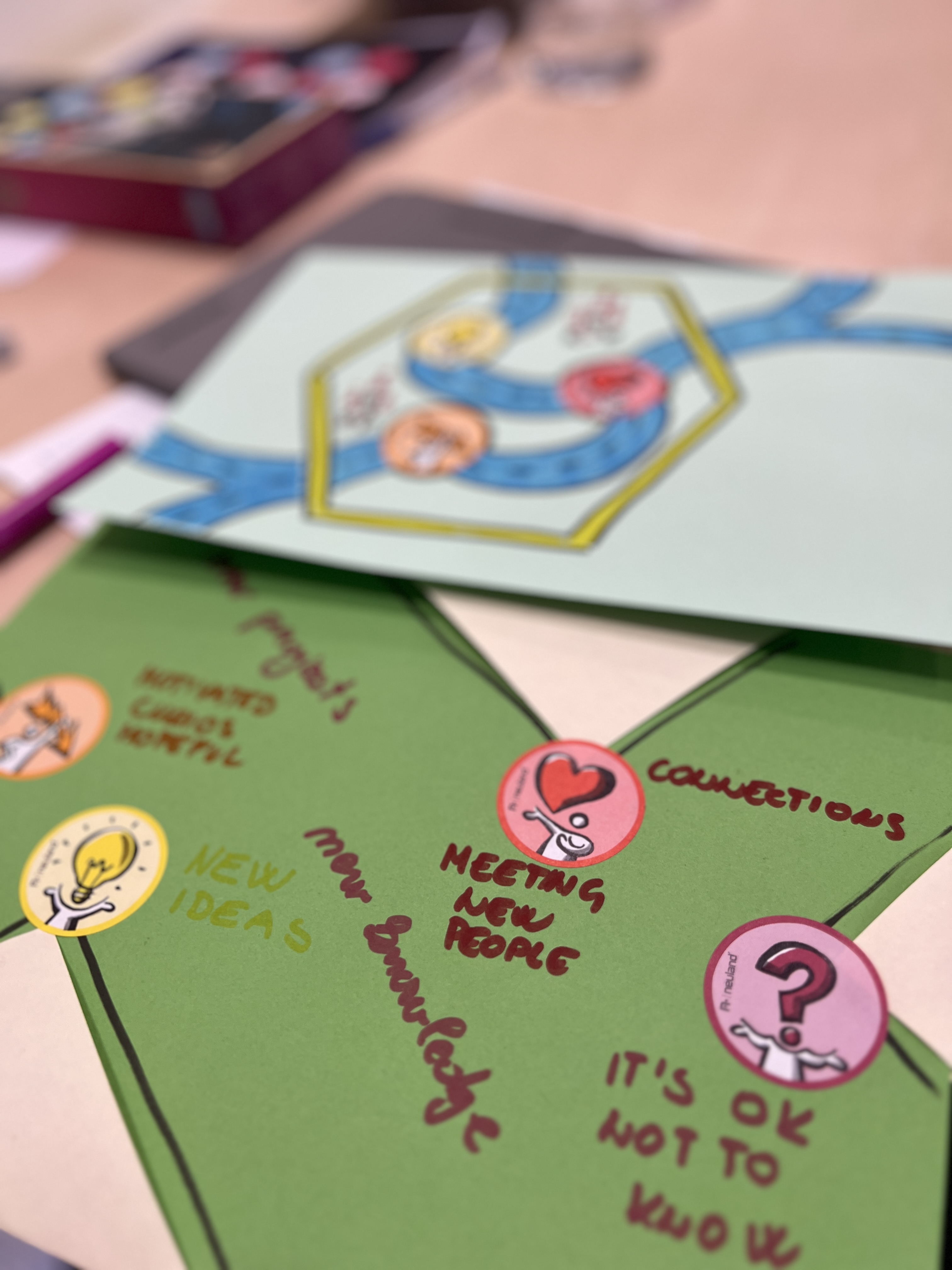
“Youth work can offer young people the chance to mature, to step back and reflect while being in digital spaces,” he says.
Policy must create the conditions for quality
Individual motivation can begin change, but it rarely sustains it.
Where youth work systems are established, Nerijus believes leadership is needed to include digital youth work in national and municipal strategies, backed by resources, competence requirements and funding. Where systems are less developed, organisations may need to build the case together.
“It needs to be integrated,” he says. “It cannot just be simple practices with one, two or three organisations going for a long time, because eventually they will lack resources, funding or qualified people.”
Practice and policy must move together.
“If the policy says, ‘you can do everything,’ but doesn’t provide guidance and funding, it will not go far,” Nerijus explains. “Practice will not be developed enough.”
Digital Systemic’s recommendations focus on translating European frameworks into national competence models, organisational development and local youth policies. In Lithuania, for example, the partners want digital youth work to feature more clearly in the framework used to assess and certify youth workers.
Nerijus also points to research from Finland. “If a municipality proactively includes digital youth work within a local youth policy document, work plan or strategy, you can see that youth work organisations and youth workers are more pro-digital youth work,” he says. “They already practise it, they are capable, and they have less stress about it.”
Learning across borders and moving forwards together
For Nerijus, one of Digital Systemic’s greatest strengths has been learning across countries.
Slovenian organisations shared practices that began during the pandemic and have since grown into wider digital transformation expertise. Partners in less established youth work systems contributed different approaches through digital literacy, skills development and entrepreneurship.
“This exchange is absolutely great in terms of working together and learning together,” Nerijus says, “even when we are at very different levels and in very different realities.”
So despite the Digital Systemic project drawing to a close, the work it points towards is only becoming more relevant. The next stage is not about mastering every new platform. It is about creating youth work systems confident enough to learn, flexible enough to experiment and strong enough to make good ideas last.

Funded by the European Union. Views and opinions expressed are however those of the author(s) only and do not necessarily reflect those of the European Union or the European Education and Culture Executive Agency (EACEA). Neither the European Union nor EACEA can be held responsible for them.
Share: